
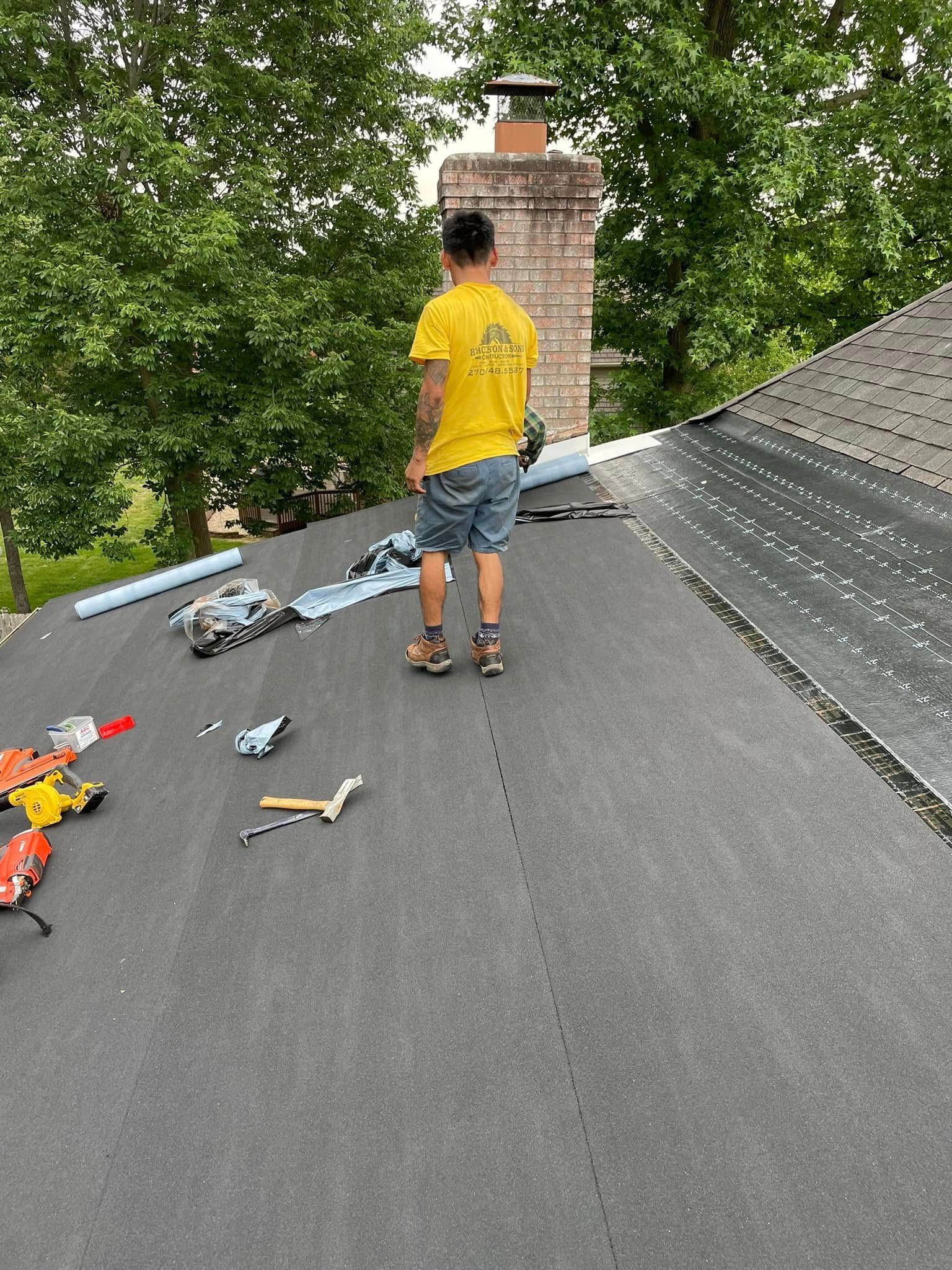
Low-Slope Systems That Prevent Pooling
Flat Roofing in Henderson for commercial buildings and modern residential designs requiring drainage-focused installations
Flat roofing systems fail when drainage is inadequate, leaving standing water that accelerates membrane deterioration and creates leak points at seams and penetrations. In Henderson, where rain intensity varies but total annual precipitation demands effective water management, flat roofing installation focuses on establishing positive drainage toward scuppers or interior drains rather than relying solely on material slope. Blackston and Son's Roofing handles flat roofing for commercial properties and residential buildings where architectural design requires low-slope or no-slope roof planes that still shed water completely after each rain event.
The service includes installing single-ply membranes, built-up roofing, or modified bitumen systems over properly sloped decking, ensuring that water moves toward drainage points without ponding in low spots. Flashing at parapets, equipment curbs, and roof penetrations receives particular attention since these areas concentrate stress and water exposure that lead to most flat roof leaks.
Schedule a drainage evaluation to identify existing or potential water pooling areas on your flat roof structure.
Why Proper Drainage Defines Flat Roof Performance
Flat roofing installation requires creating a minimum slope of one-quarter inch per foot toward drains or roof edges, which often involves tapered insulation layers since structural decks are rarely built with adequate pitch. Membrane materials like TPO, EPDM, or PVC are rolled out and fastened or adhered, with seams heat-welded or chemically bonded to create watertight joints. Drainage paths are verified before membrane installation to ensure that water flows as designed rather than pooling in areas where the deck has settled or insulation is compressed.
After installation, you notice that the roof surface clears completely within hours of rain stopping, with no standing water remaining in valleys or around penetrations. The building interior stays dry even during extended storms, and ceiling tiles or drywall no longer show moisture stains that indicate slow leaks at flashing or seam failures. Energy costs stabilize as the insulation layer beneath the membrane remains dry and effective rather than losing R-value due to water saturation from leaks or condensation.
Flat roofing requires regular inspections to clear drains of debris, check seam integrity, and address membrane punctures before they expand. Unlike pitched roofs where damage is often visible from the ground, flat roof issues develop unnoticed until leaks appear inside, making scheduled maintenance essential for extending system lifespan. The service also includes evaluating whether existing drainage capacity matches current roof load and precipitation intensity, as changes in rooftop equipment or local weather patterns can overwhelm undersized drains.
Questions About Flat Roofing Systems
Commercial property managers and homeowners with flat roofs ask about maintenance needs, material longevity, and how to prevent the leaks that plague poorly installed systems.
What causes water to pool on flat roofs even after recent installation?
Pooling occurs when decking deflects under load, insulation compresses unevenly, or the original slope was insufficient to move water toward drains. In Henderson, where temperature changes cause expansion and contraction, structural movement can create low spots over time even if the roof was properly sloped initially, requiring additional tapered insulation to restore drainage.
How often should flat roofs be inspected to catch problems early?
Inspections twice per year, ideally in spring and fall, allow for clearing drains before heavy rain seasons and identifying membrane damage before minor issues become major leaks. Blackston and Son's Roofing checks seam integrity, flashing condition, and drainage flow during these visits to address concerns while repairs remain simple and inexpensive.
What membrane materials last longest in commercial flat roofing applications?
TPO and PVC membranes offer twenty to thirty-year lifespans when properly installed and maintained, with heat-welded seams that resist separation better than adhesive-bonded systems. Modified bitumen provides similar durability with better puncture resistance for roofs with frequent foot traffic or equipment installations, though installation requires torch application or hot mopping that increases labor complexity.
Why do flat roofs leak more often at penetrations and edges than in the field?
Penetrations like vents, HVAC curbs, and drains require flashing that transitions between vertical and horizontal surfaces, creating potential failure points where materials expand at different rates. Edges and parapets experience higher wind uplift forces that stress membrane attachments, and any gaps in these areas allow water entry that bypasses the main roof membrane.
How does flat roofing installation differ between commercial and residential applications?
Commercial flat roofs typically use mechanically fastened or fully adhered membranes over rigid insulation, designed for larger roof areas and equipment loads. Residential flat roofs may use similar materials but often involve smaller sections with more architectural details, requiring careful flashing integration with adjacent walls and parapet caps.
Blackston and Son's Roofing provides flat roofing installation, repair, and maintenance for commercial and residential properties throughout Henderson. Call to arrange an inspection or request a replacement estimate for aging flat roof systems that no longer drain effectively.