Stop Water Damage Before It Spreads
Emergency Roof Tarping in Henderson for properties with sudden openings from storm damage or structural failure
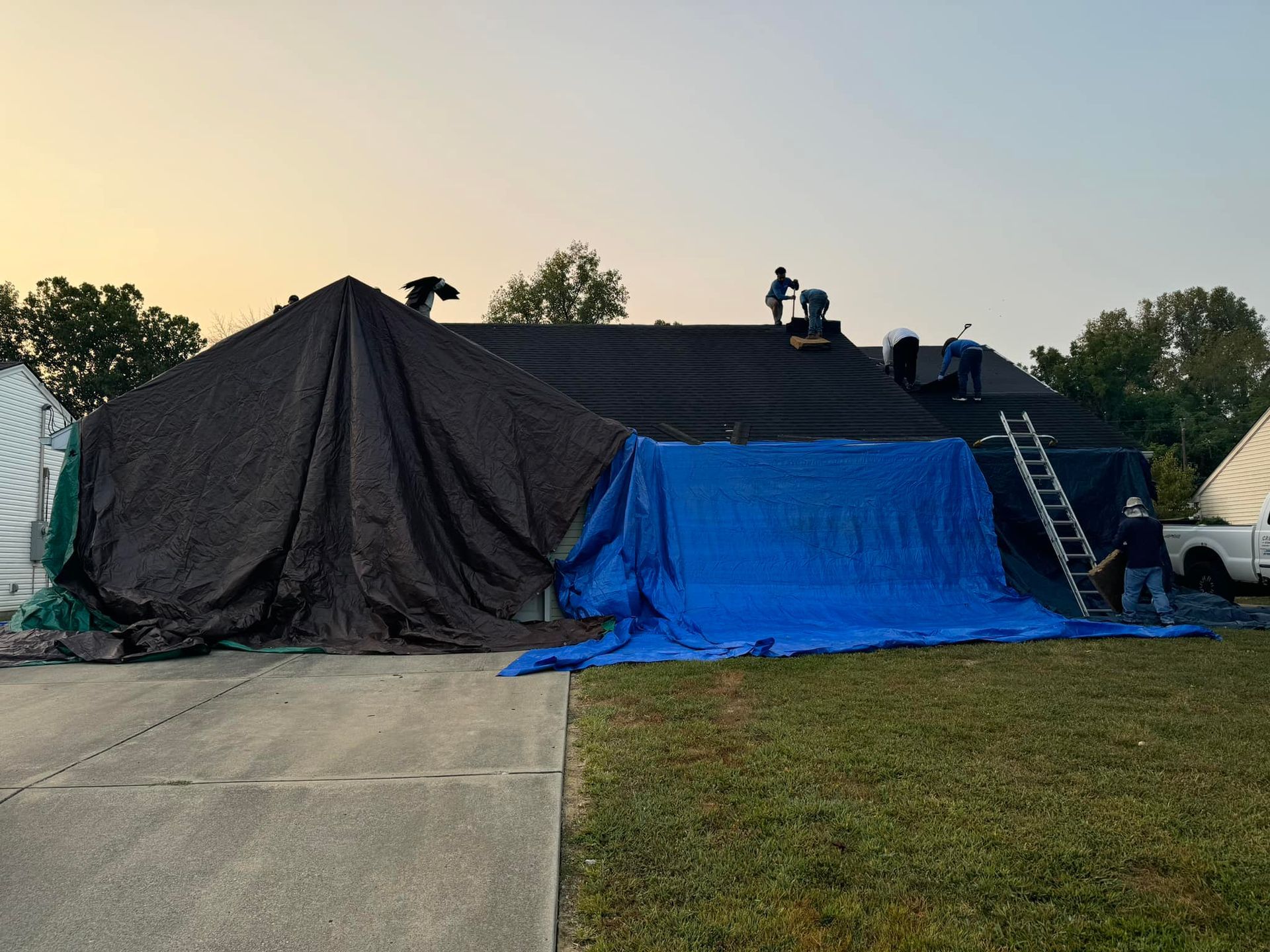
When a roof develops openings from wind, falling trees, or material failure, water enters the building within minutes during rain, saturating insulation, ceiling materials, and interior finishes before permanent repairs can be scheduled. Emergency roof tarping provides immediate protection by covering damaged sections with heavy-duty tarps secured to prevent wind displacement, stopping water intrusion until weather permits full repairs and materials arrive. Blackston and Son's Roofing responds to tarping requests throughout Henderson following storms or sudden damage events, prioritizing properties where interior spaces remain exposed to weather.
The service involves placing reinforced tarps over compromised roof areas, fastening edges to prevent wind uplift, and ensuring water channels off the tarp surface rather than pooling in valleys. Tarping buys time for insurance claims, material orders, and contractor scheduling without allowing ongoing water damage to worsen while permanent solutions are arranged.
Call immediately when roof damage creates openings that expose interior spaces to weather conditions.
What Emergency Tarping Accomplishes Before Repairs Begin
Emergency tarping involves selecting tarp sizes that extend beyond the damaged area by several feet, allowing fastening into undamaged roof sections where anchors will hold securely. Tarps are stretched tight to prevent wind from getting underneath, and edges are secured with boards and fasteners rather than relying on rope ties that loosen over time. The installation creates a temporary weatherproof barrier that sheds rain and resists wind until permanent roofing materials can be installed.
Once tarps are in place, you notice that rain no longer enters the building through damaged sections, ceilings stop accumulating water stains, and insulation remains dry rather than becoming saturated and losing thermal performance. Interior humidity levels stabilize, preventing mold growth that begins within forty-eight hours when wet materials are not dried or isolated. The tarping holds through multiple weather events if properly secured, providing protection that lasts weeks when repair schedules extend due to contractor availability or material lead times.
Emergency tarping does not replace permanent repairs, but it prevents escalating damage costs by isolating the building interior from ongoing weather exposure. The service is especially critical when storms damage multiple properties simultaneously, creating contractor backlogs that delay permanent repairs for weeks. Tarping ensures that initial roof damage does not compound into widespread interior restoration projects involving drywall replacement, insulation removal, and mold remediation.
Questions Homeowners Ask During Roof Emergencies
When sudden roof damage occurs, property owners need clarity about response timing, tarp durability, and what happens next in the repair process.
How quickly can emergency tarping be completed after damage occurs?
Response time depends on weather conditions and simultaneous calls following widespread storm events, but most tarping is completed within hours of contact if access to the property and roof is safe. In Henderson, where severe storms can damage multiple roofs in a single event, prioritization goes to properties with the largest openings or where interior water damage is actively occurring.
What materials are used for emergency tarping to ensure they hold until repairs?
Heavy-duty polyethylene tarps rated for outdoor use provide water resistance and UV stability, with reinforced edges that resist tearing when fastened. Tarps are secured with lumber battens screwed into solid roof decking rather than relying on adhesive or rope, which prevents wind from lifting edges and allows the tarp to remain effective through multiple storms if necessary.
How long can tarps remain in place before permanent repairs are required?
Tarps function effectively for several weeks when properly installed, though prolonged sun exposure eventually degrades the material. Most tarps are replaced with permanent roofing within two to four weeks, but if material delays extend repair timelines, tarps can be inspected and re-secured to maintain protection until work begins.
Does insurance cover the cost of emergency tarping after storm damage?
Most homeowner policies cover emergency mitigation measures like tarping as part of the overall claim, since preventing additional damage reduces total claim costs. Documentation of tarping work, including photographs and invoices, should be provided to the insurance company along with other damage evidence to ensure reimbursement.
Why is professional tarping better than doing it yourself after roof damage?
Professional tarping uses materials and fastening methods designed to withstand wind without damaging the roof further, and installers identify the full extent of damage that may not be visible from the ground. Improper tarp installation can allow continued water intrusion or create additional damage when wind gets underneath and tears both the tarp and surrounding roofing materials.
Blackston and Son's Roofing provides emergency tarping services throughout Henderson when storms or sudden failures create roof openings. Contact immediately for rapid response to protect your property from further water damage while permanent repairs are arranged.